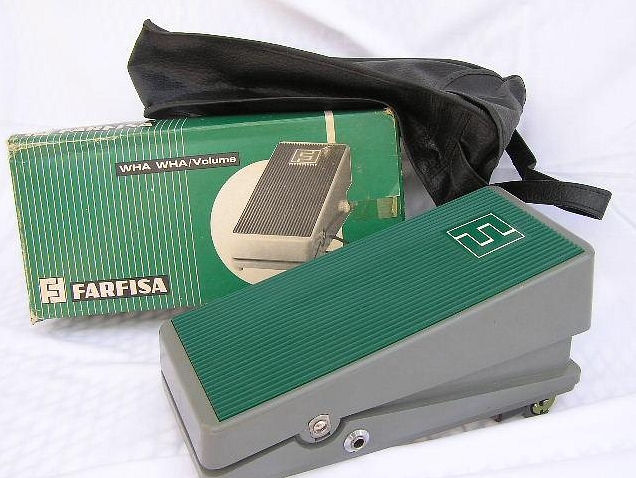
The Farfisa Wha Wha / Volume
Last updated 10/31/25
By Paul Marossy
Until recently, I was not aware that Farfisa maufactured various pedals which employ a wah pedal style enclosure that has a treadle which
can be operated to adjust something in the circuit via a potentiometer. There was a few different offerings. In addition to the
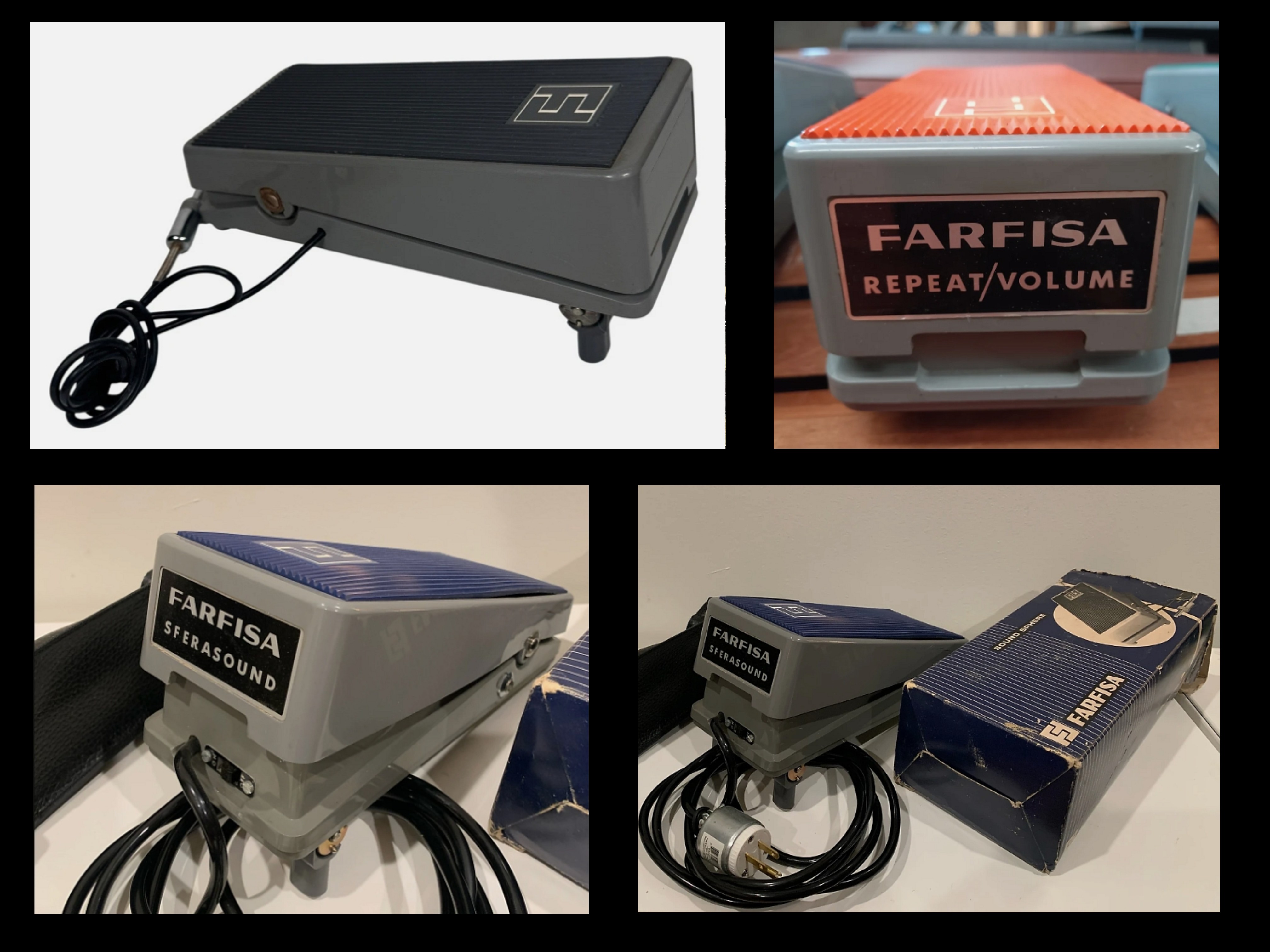
Wha Wha / Volume pedal, there was also a Volume-Expression pedal for use with some models of keyboards, a Repeat / Volume pedal which is a very interesting twist on a tremolo, and
the Sferasound 8-stage FET phaser which is said to sound much like a Univibe or a Leslie (but at minimum possible speed is still too fast for some people's taste). There is a picture of all these units at the bottom of this page.
I saw this
Wha Wha / Volume pedal on eBay and it was odd enough / intriguing enough that I just had to purchase it. In my pre-purchase research I learned
that it was not just another straight copy of the Vox inductor based wah circuit, which made it much more interesting.
Anyway, I knew that Farfisa made various types of organs but it did come as a surprise to me that these Italian-made Farfisa pedals existed. As for the sound,
I think it sounds awesome! It has the umph of the Shin Ei Companion wah but with more highs, and the sort of synthy low end of the Colorsound inductor based wah pedal.
Sounds fat and not too shrill. It has that Alice In Chains kind of sound going on. Pretty cool.
There was apparently two versions of this pedal:
Version 1 - This version is like in the pictures below. There is no slide switch on the front and the sweep cap is 0.0056uF. The 0.01uF input cap is a brown unknown brand
and the rest of the film capacitors are mostly light blue "Arco" brand. Transistors are BC209B NPN silicon. Sweep cap value is 0.0056uF. This version sounds closer to the original
Vox circuit that we all know, but with a deeper bottom end.
Version 2 - This version has a small slide switch on the front labeled as "O" (for Organ) and "G" (for Guitar). All that the switch does is add a 220K resistor on the input wire,
to lower the input level strength when used with an organ. In guitar mode that resistor is switched out of circuit. Using this switch you can get two different characters to the
sound when used with guitar. This version also uses BC209B transistors and the film capacitors are usually light blue "Arco" brand. The sweep cap value is the more customary 0.012uF size.
This version has a little fatter sound, due to the larger sweep cap. I modded mine to have an internal switch that can select between 0.0056uF and 0.01uF.
CLICK HERE
to see how I did that. It simply adds a 0.0047uF capacitor in parallel to increase the value to about 0.01uF. I was able to
do this in a way that is easily reversible and does not change anything cosmetically.
I have not been able to see inside more than four or five examples and I don't know which version came first, or if they were offered concurrently. It appears that other minor changes
in components were made in some versions, so the PCB layout linked at bottom of this page may differ somewhat from what can be found in other examples. These revisions seem to be
confined to the resistors connected to the transistors. Probably was mostly to do with getting different batches of transistors to bias properly and to sound right. As with all these
Italian made products, the manufacturers of capacitors, transistors, etc. could vary from unit to unit. The manufacturer of the 4.7uF caps varies as well. There were two different manufacturers of the inductors. I am not sure if the size of the inductors are the same in all examples or not. From appearances it seems they should have the same specs.
Below is some more detailed information about this unusual and rather rare Italian wha wha pedal.
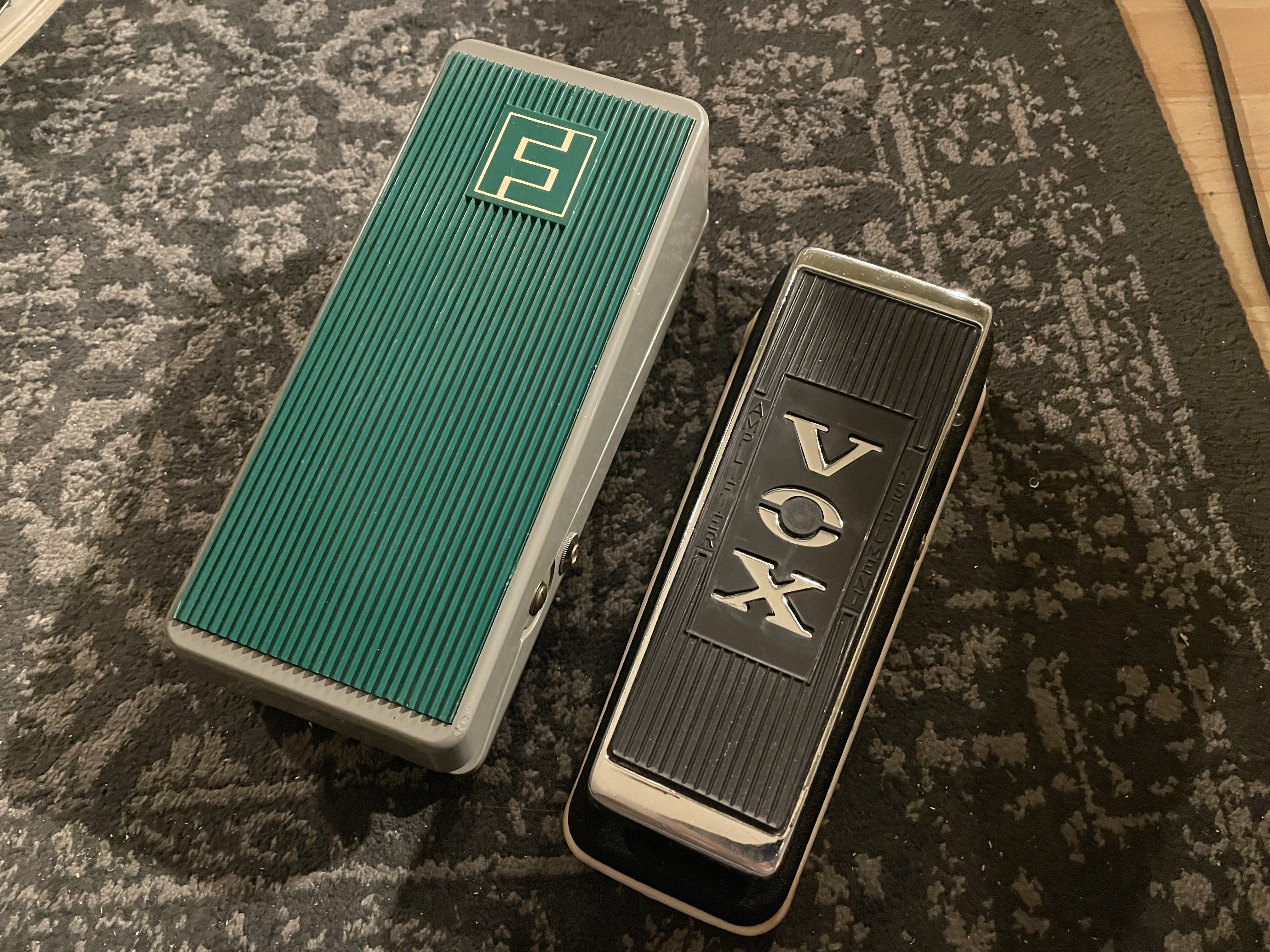 |
The first thing you'll notice is the massive size of this thing. I think it's now the largest wah pedal I have in my collection. It's even larger than the Maestro Boomerang is. It measures 10" long, 4.25" wide and is 4" high with the treadle in toe down position, with the feet underneath folded down. It weighs 3.92 lbs with an alkaline battery installed! |
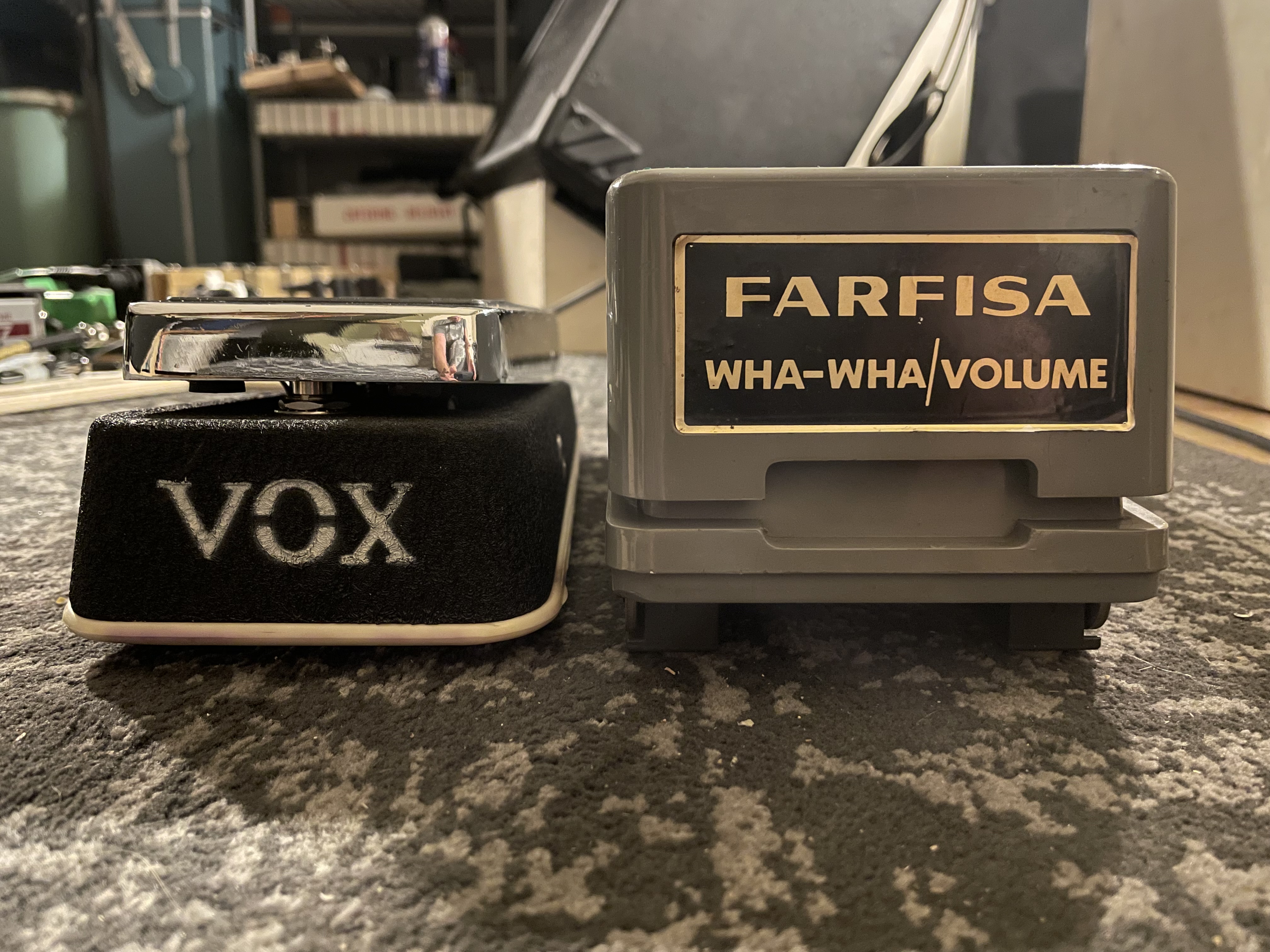 |
Here is view from the front with the treadle in toe down position. The enclosure is constructed of a tough grey plastic which is similar to the early 1st issue Arion pedals with the grey plastic enclosures. That notched area is where the aforementioned slide switch would be located. |
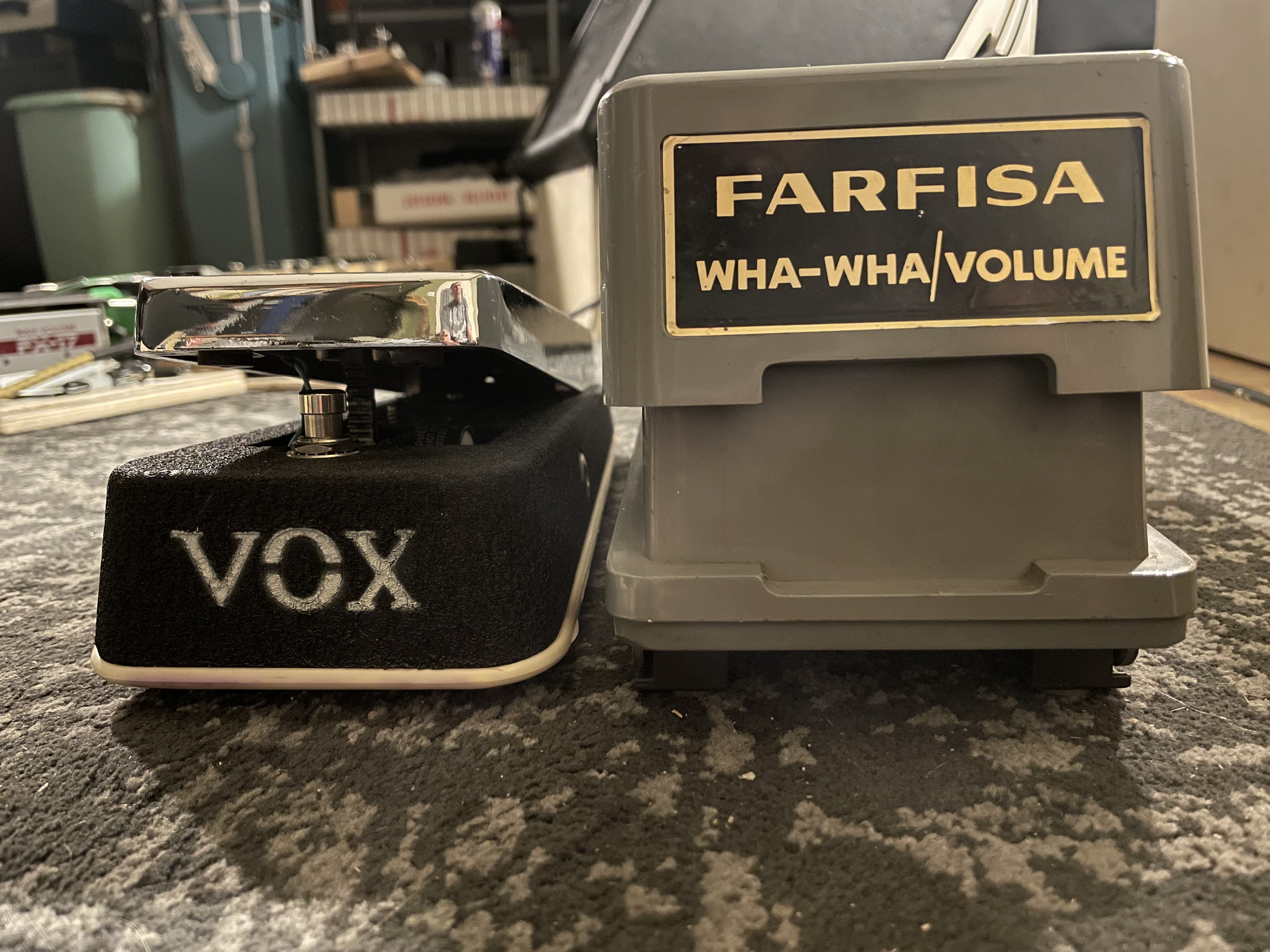 |
Here is front view with the treadle in heel down position. It kinda dwarfs my Italian Vox wah pedal. Believe it or not, it could get even taller if you unfold the legs underneath. More on that below. |
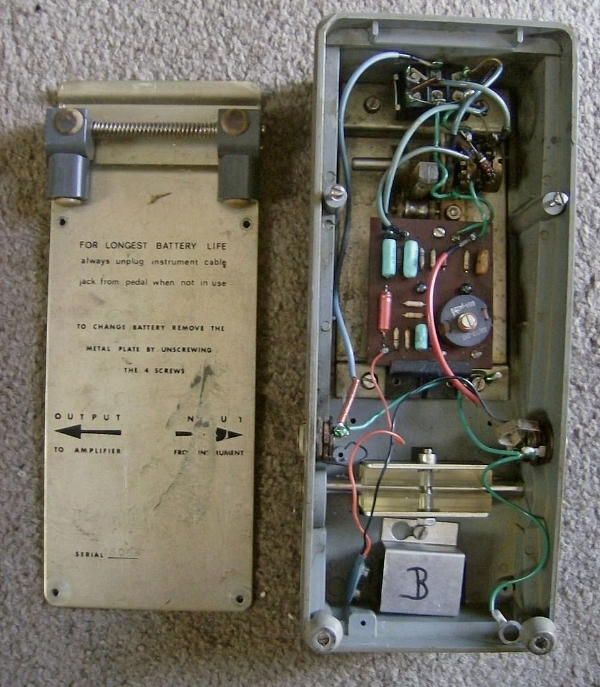 |
With the bottom removed we can see the general construction of the unit. The electronics are mounted to a heavy metal baseplate which can be lifted out of the enclosure by removing four screws. Battery is located in the customary position, as are the input/output jacks (although they are backwards from convention with input on the left side, like the Maestro Boomerang). |
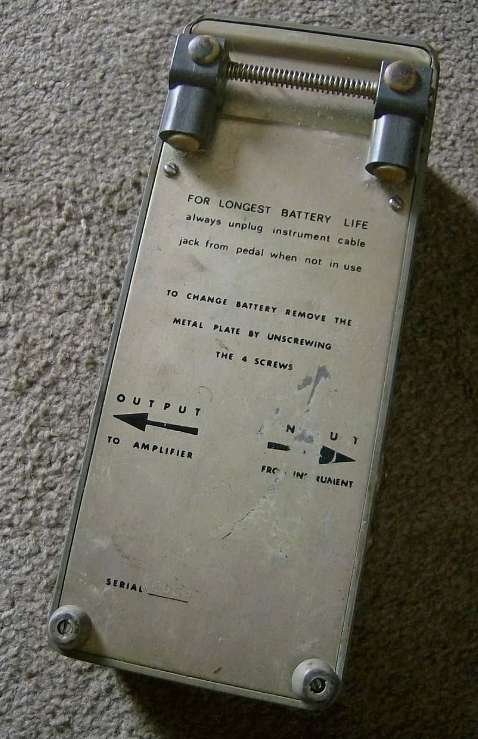 |
The very heavy duty metal bottom cover employs an odd feature - spring loaded folding legs. The front of the pedal becomes about an inch taller when these are unfolded into the upright position. This adds about another inch to the overall height. A wire which connects to ground makes contact with one of the corners of the baseplate when it is put in place. |
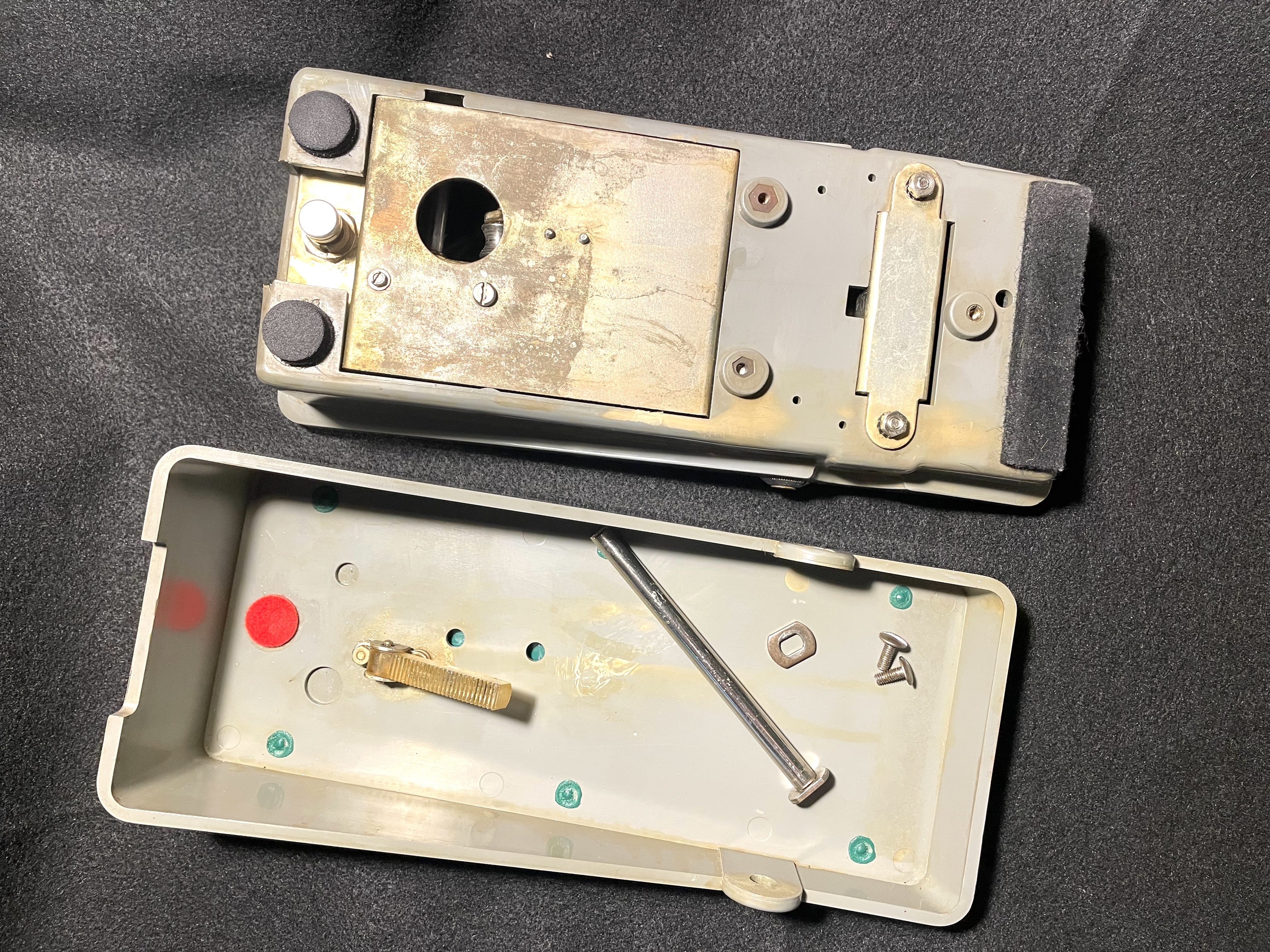 |
Here the treadle has been removed. This shows the metal electronics mounting plate from the other side. Note the round hole thru which the rack gear protrudes. If you ever have to change or tighten the nut on the DPDT switch you'll have to dismantle it to this point to even get to it. |
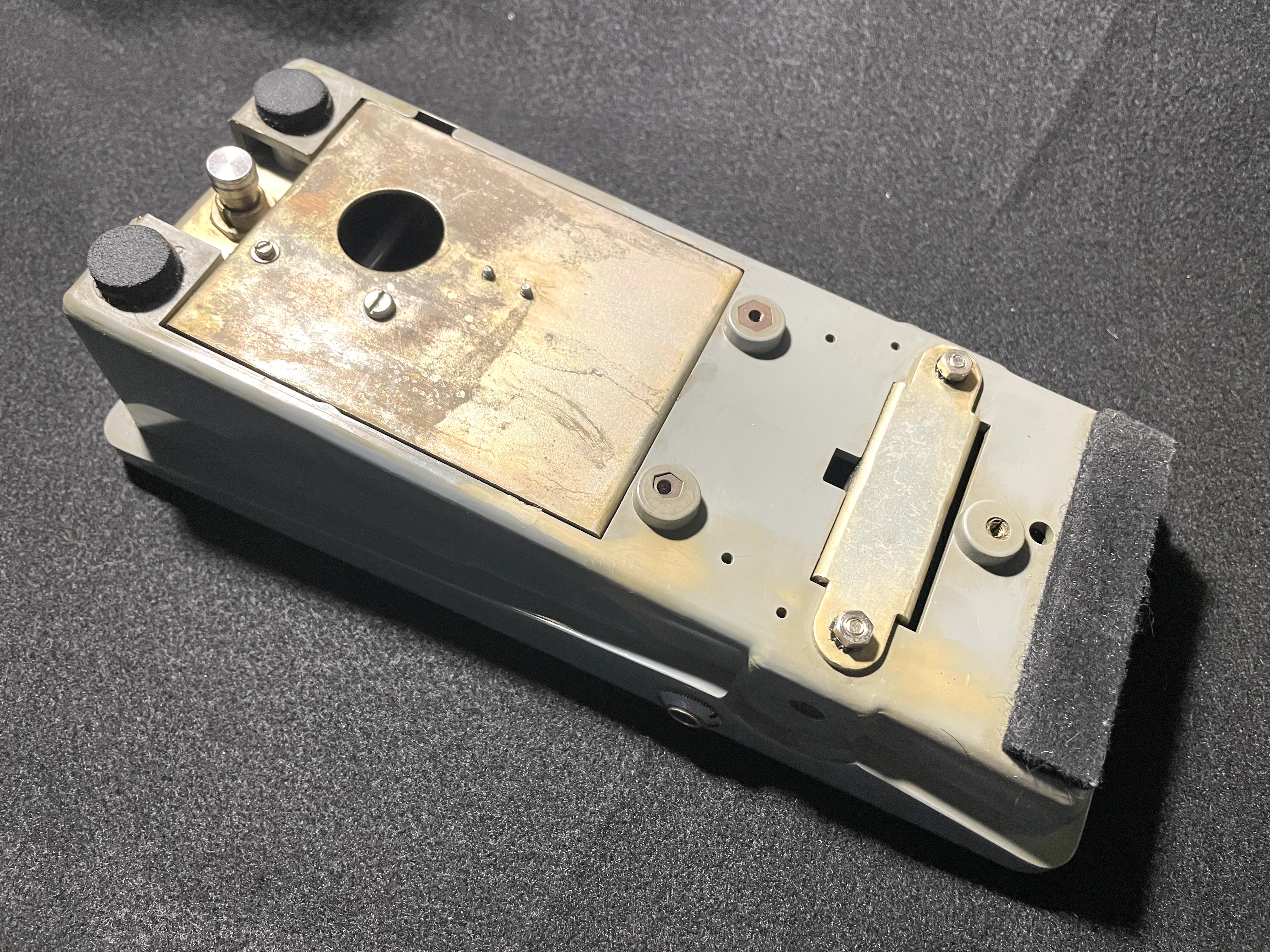 |
At the toe and heel end of the shell are some felt pads which I assume are there so the pedal doesn't make clunking noises while the treadle is experiencing up and down movements at each extreme of travel. |
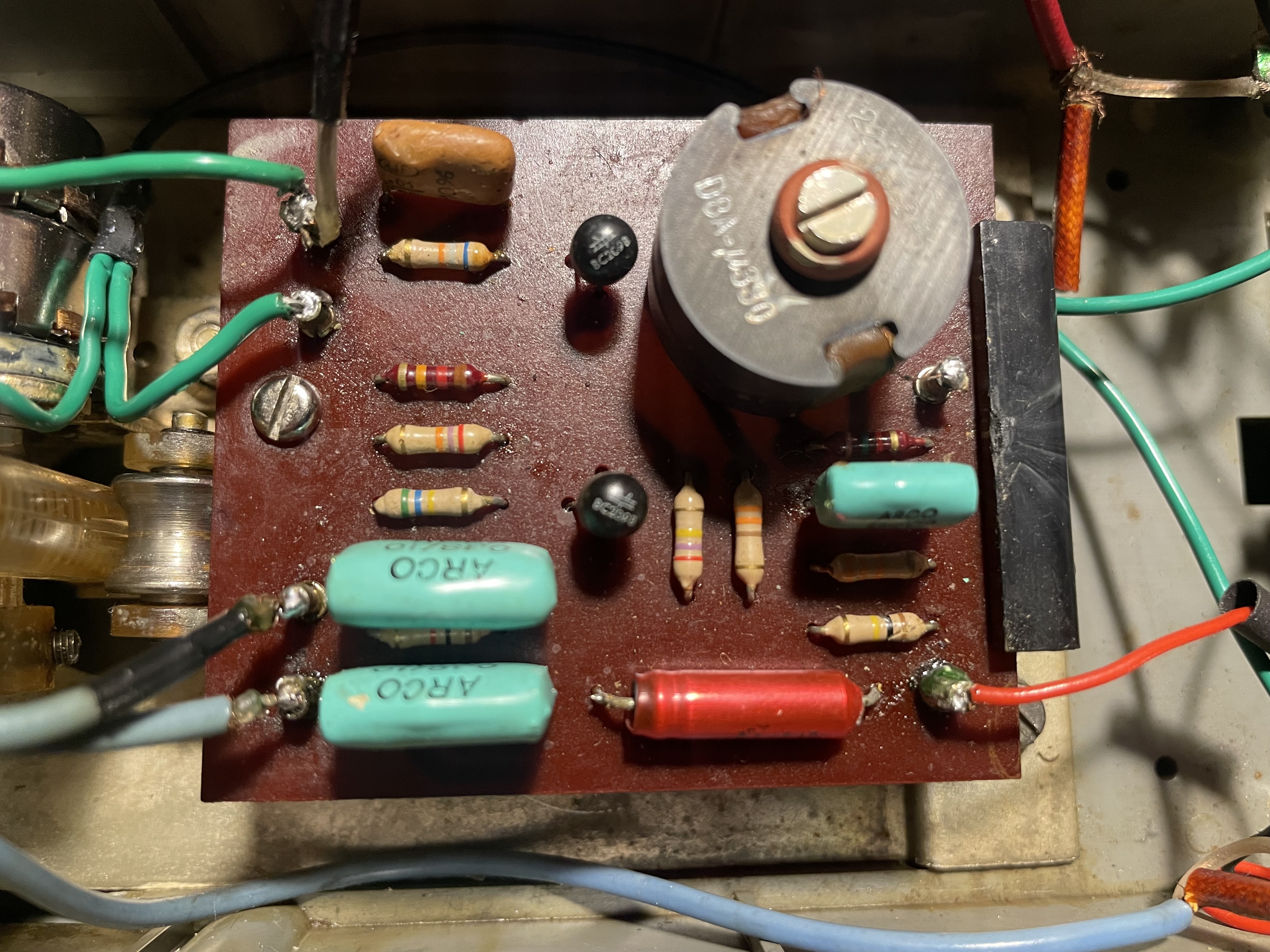 |
The component side of the PCB has all of the familiar parts of the Vox style inductor based circuit. The circuit topology follows the Vox circuit but some of the cap & resistor values have been changed, as well as the inductor value (more inductance). |
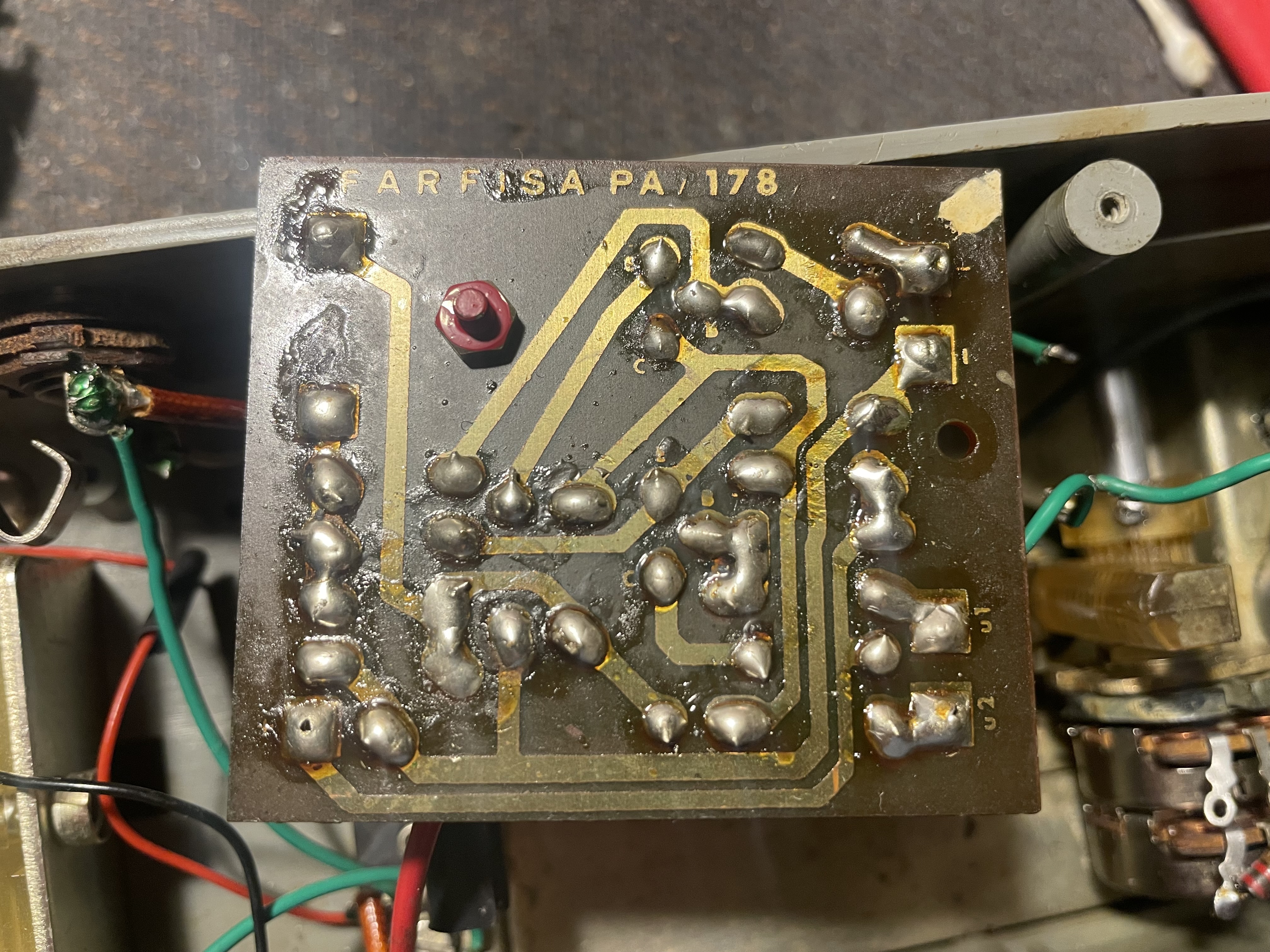 |
Here is the underside of the PCB. Pretty typical for the time period. I'm guessing this was made in the early 1970s. The "PA 178" marking I believe is Farfisa's model number. |
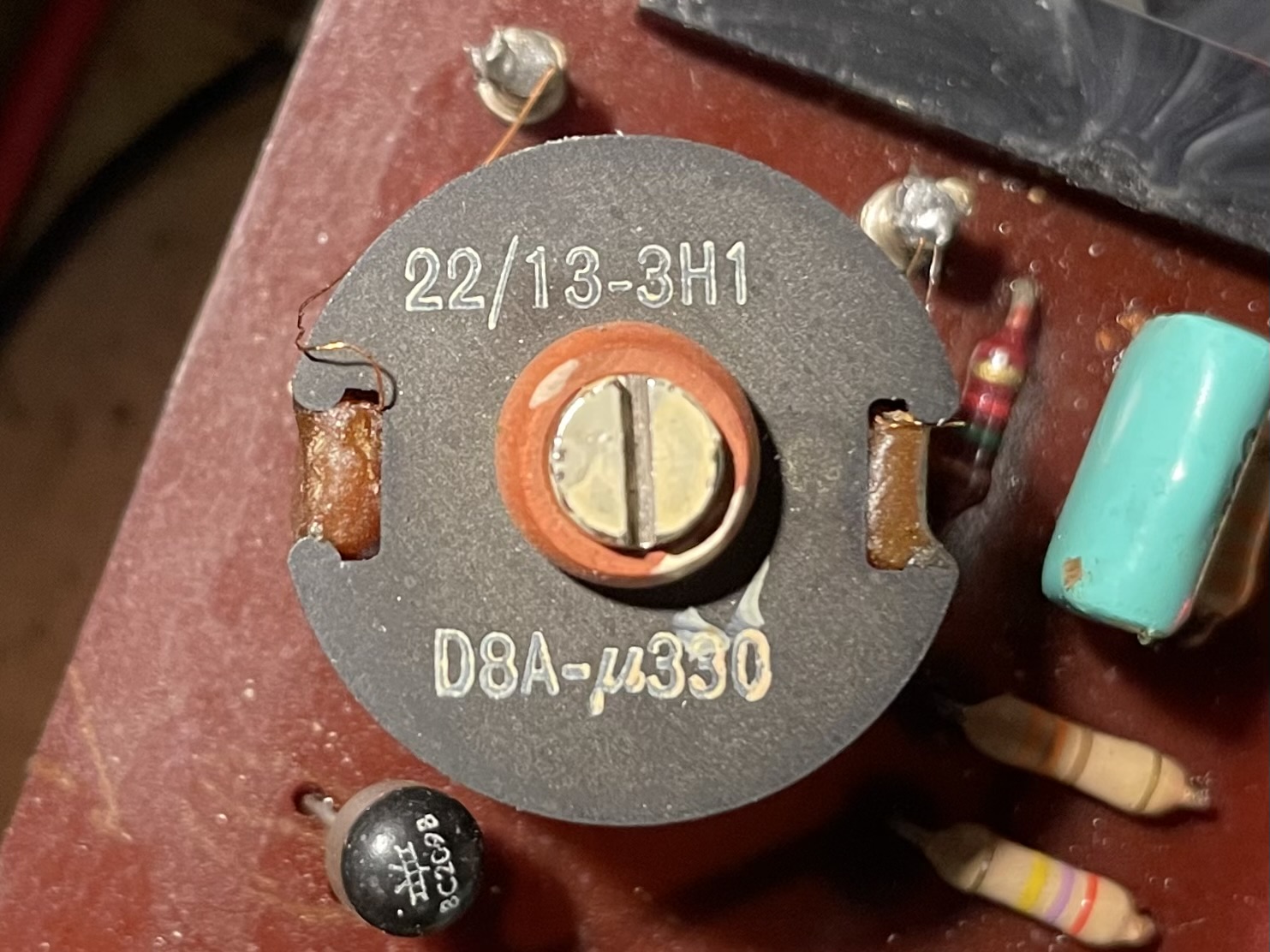 |
The inductor measures about 830mH with a DC resistance of 105 ohms. The tiny wires connecting it to the PCB are kinda dangling in the wind, so be careful not to break them! |
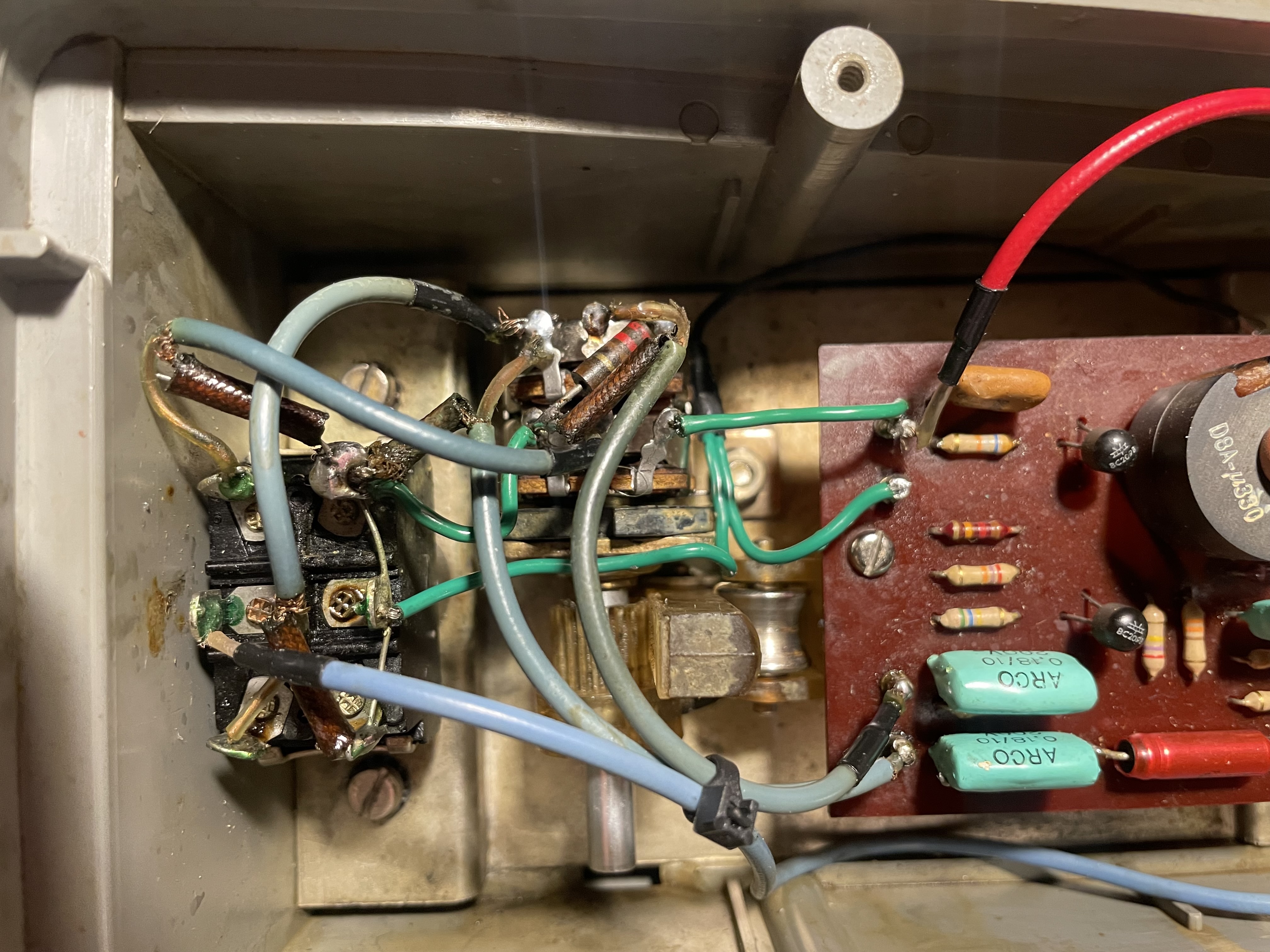 |
The wiring to the DPDT switch is kinda messy due to most of the wires being shielded cables with one end of the shielding connected to ground. The core of these shielded cables has very tiny stranded wires and it's not too hard to break them. It can be a bit frustrating dealing with them and it reminds me a bit of the tiny delicate wire used in 1970s Soviet guitar effects. One pole of the DPDT switch is used simply for ground connections and the other pole switches between the two output signals. Circuit input is always connected. So no, it's not true bypass (gasp). |
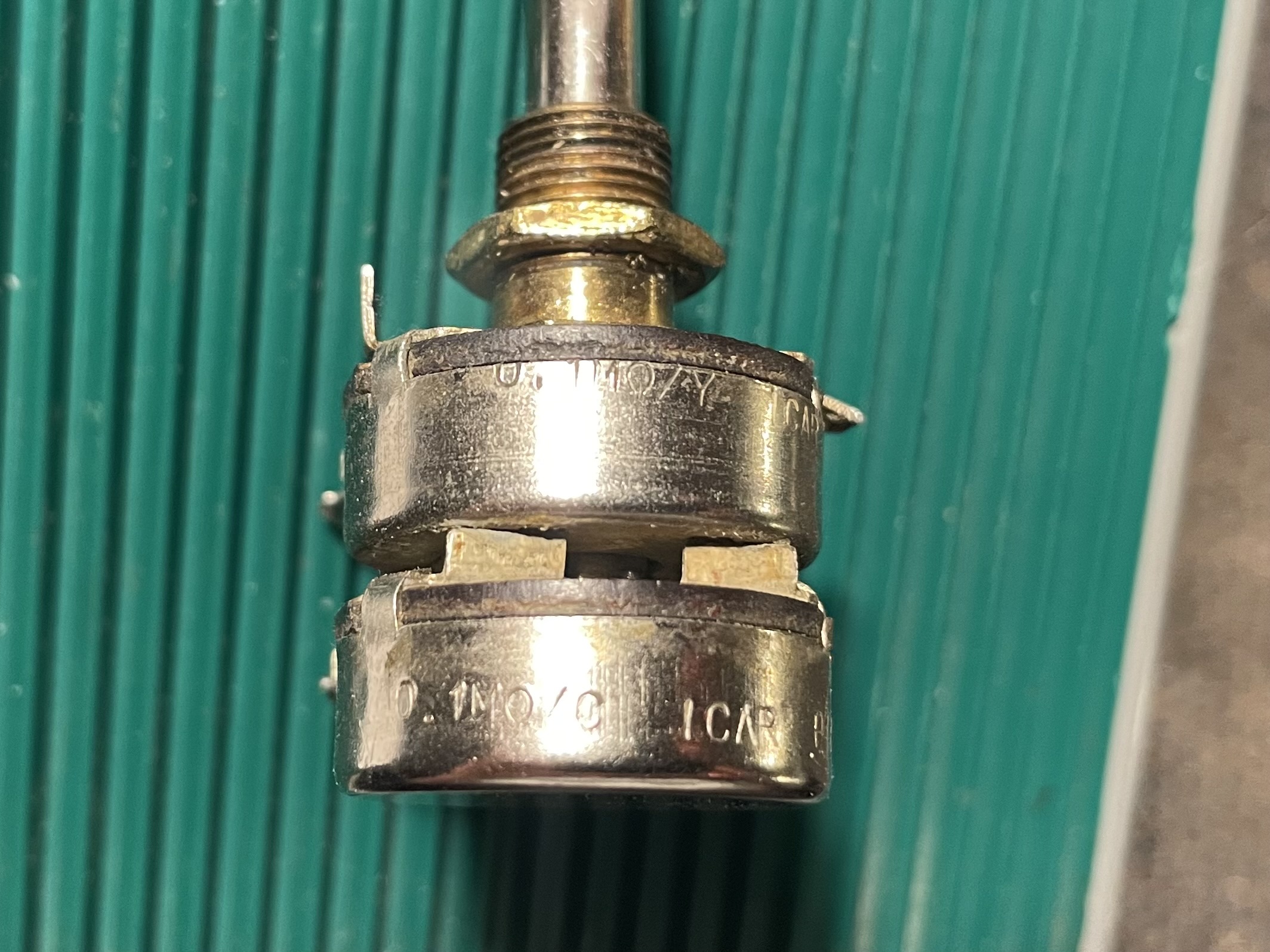 |
The original potentiometer was made by ICAR and is a dual 100K pot. The volume pot is marked "0.1 MO / Y" and the wah pot is marked "0.1 MO / C". This suggests to me that the volume pot has some kind of special taper and the wah pot is reverse log. Good luck finding a replacement! It's interesting to me that the volume pot is only 100K as that will load down guitar pickups a bit, resulting in some amount of "tone sucking". |
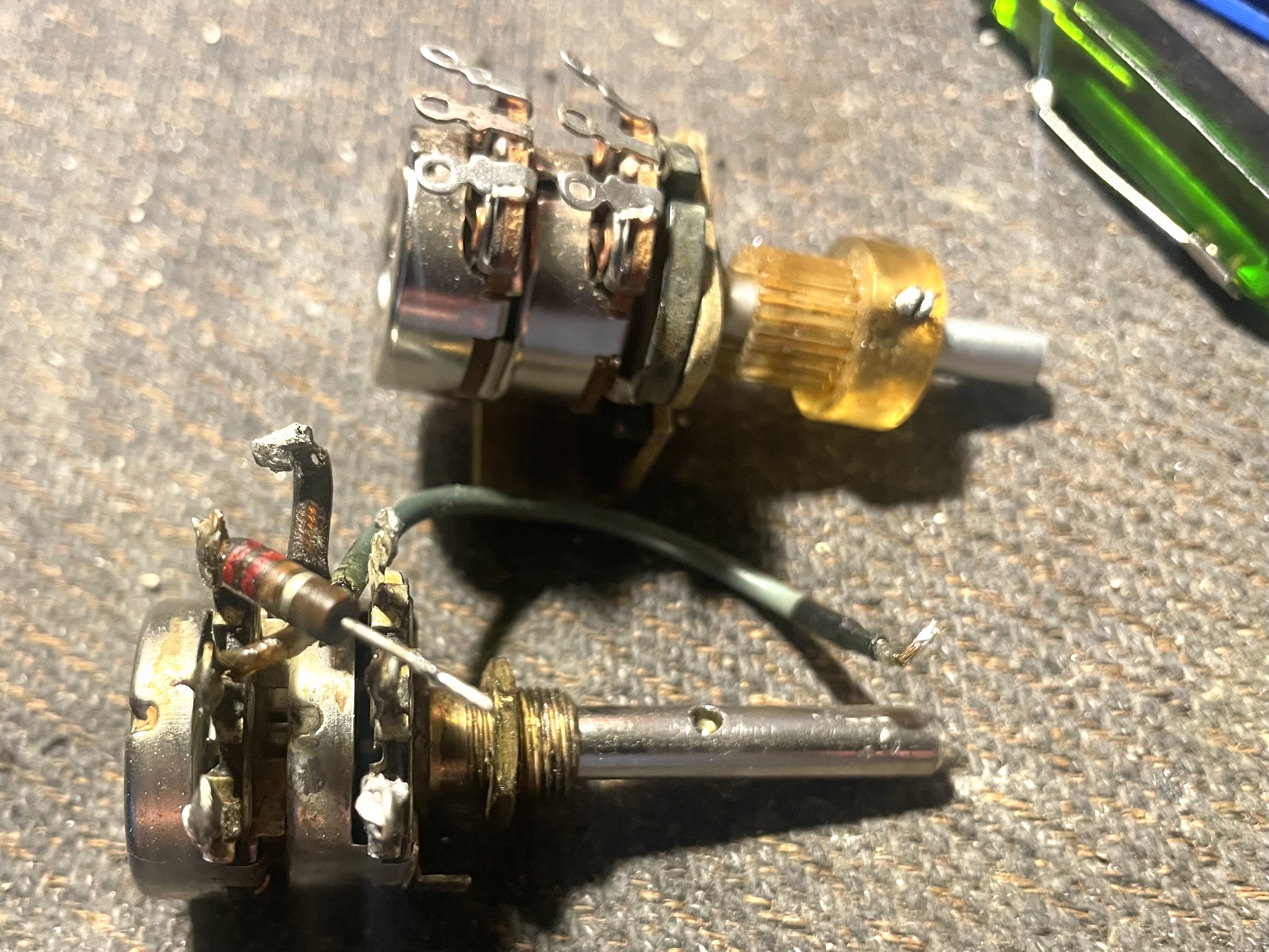 |
Unfortunately the original ICAR pot in my example was not passing any signal at all, and soaked in oil (WTF?), so it had to be replaced. I really lucked out as I had a spare Italian made dual 100K audio pot I bought something like 20 years ago for a Parapedal clone project which I could use as a replacement. The wah section works OK but the volume function not so great. It can't go to zero volume and it just isn't loud enough because it can't go to wide open position without completely messing up the wah function. I couldn't really find a good compromise so I focused on making the wah section work well. I am unable to determine if the volume function is supposed to go from zero to full volume or if it was intended to be more of a volume swell. The original pot is in the foreground. |
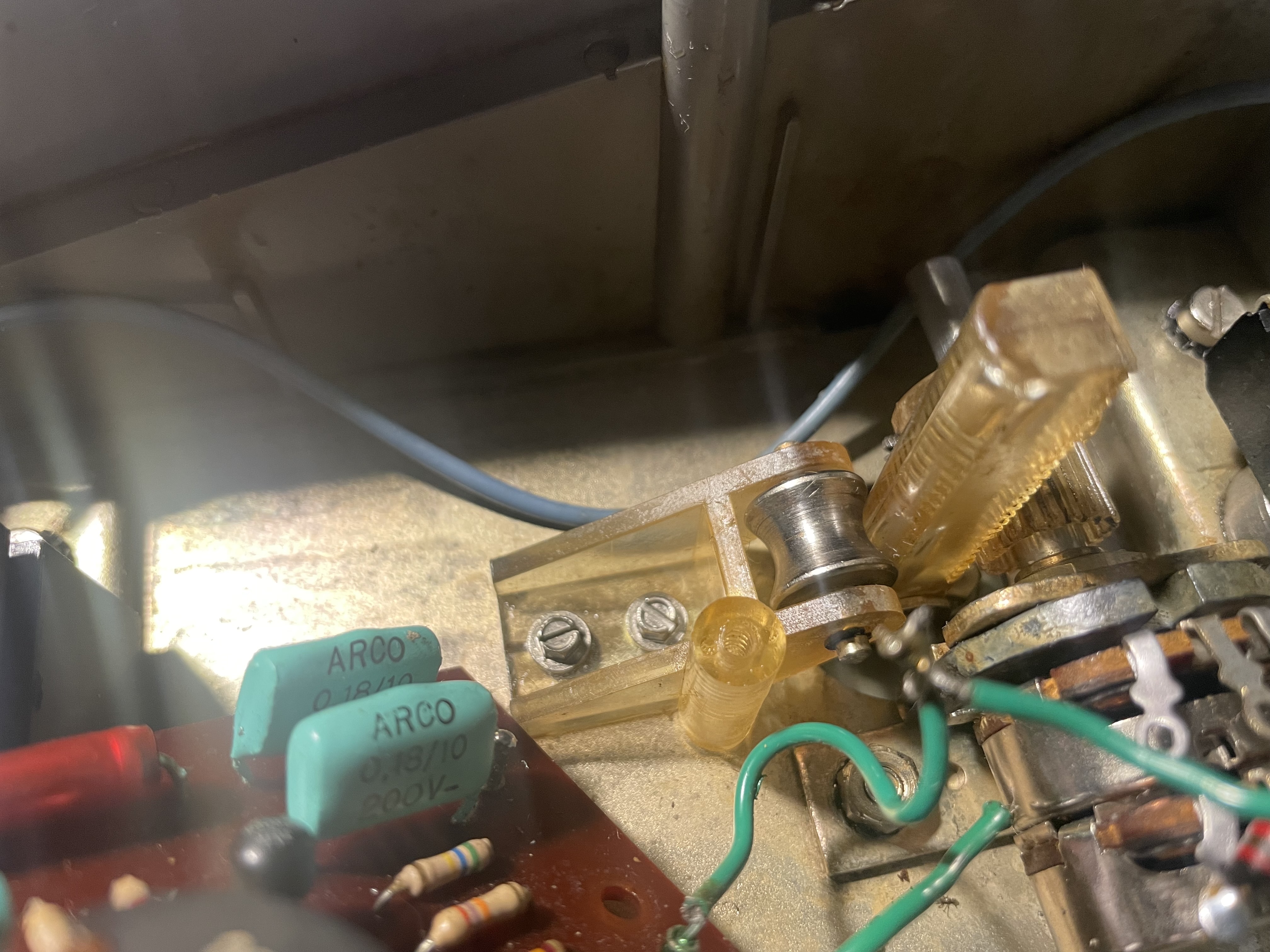 |
One thing that is a little annoying is how you adjust the rotation of the pot. Underneath the PCB is this interesting roller assembly which interfaces with the rack & pinion gear. There is a bit of front to back adjustment but the annoying thing is that it has to be completely removed in order to do any kind of adjustment to the pot, so it's finicky and there is the danger of accidentally ruining the inductor if you're not careful. This is one instance where a continuous test signal is handy to have available when making adjustments. |
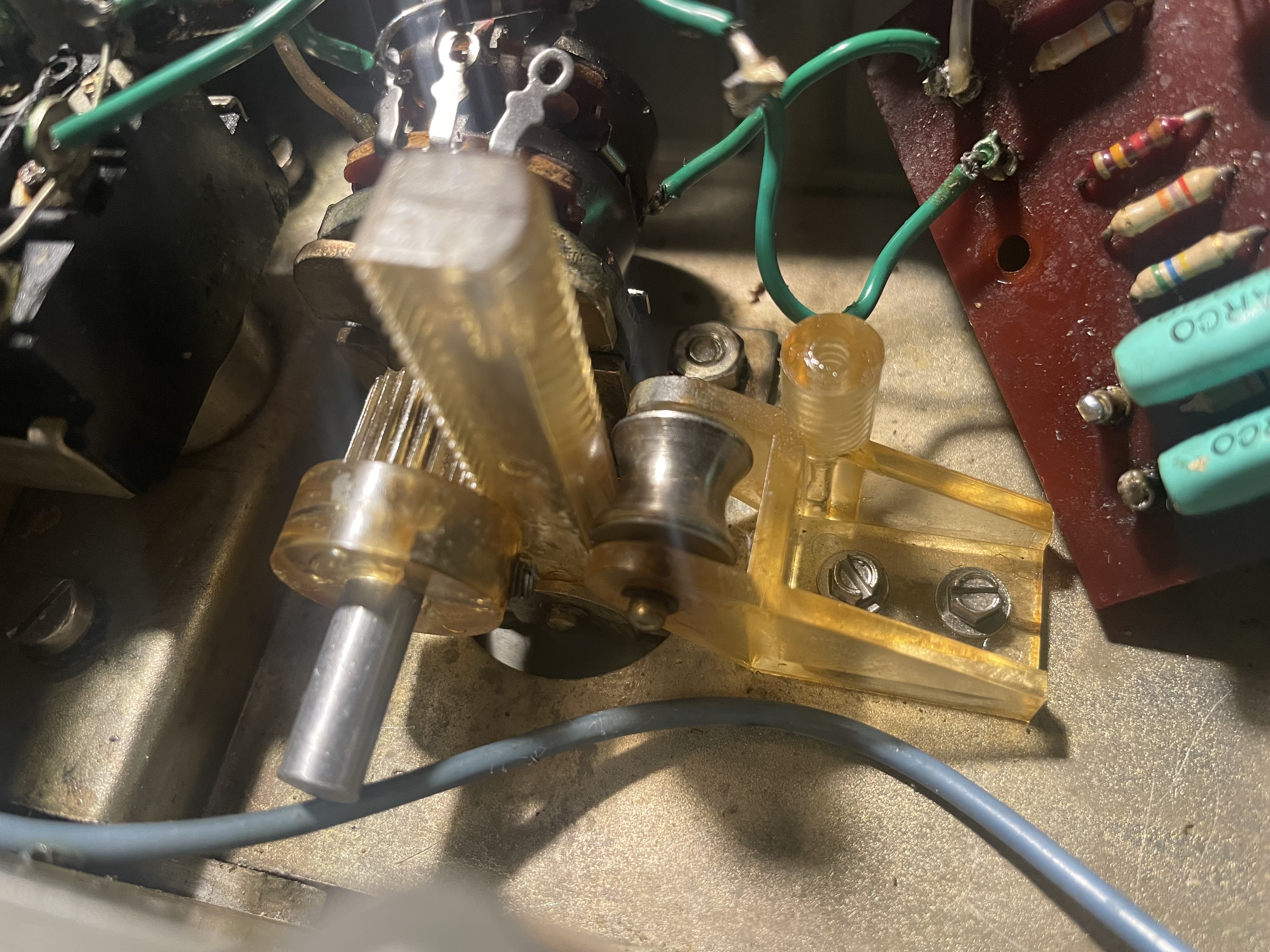 |
The PCB is also fastened to this piece via an integral threaded post which receives the fastening screw. The other end of the PCB slides into a black plastic piece riveted to the baseplate. Not sure what kind of plastic the roller assembly is made of but it seems to be pretty tough stuff. It was clear when new but has yellowed with age. The rack and pinion gear on the pot is made of the same stuff. In some examples this roller assembly and the gear on the pot is made of a white plastic. |
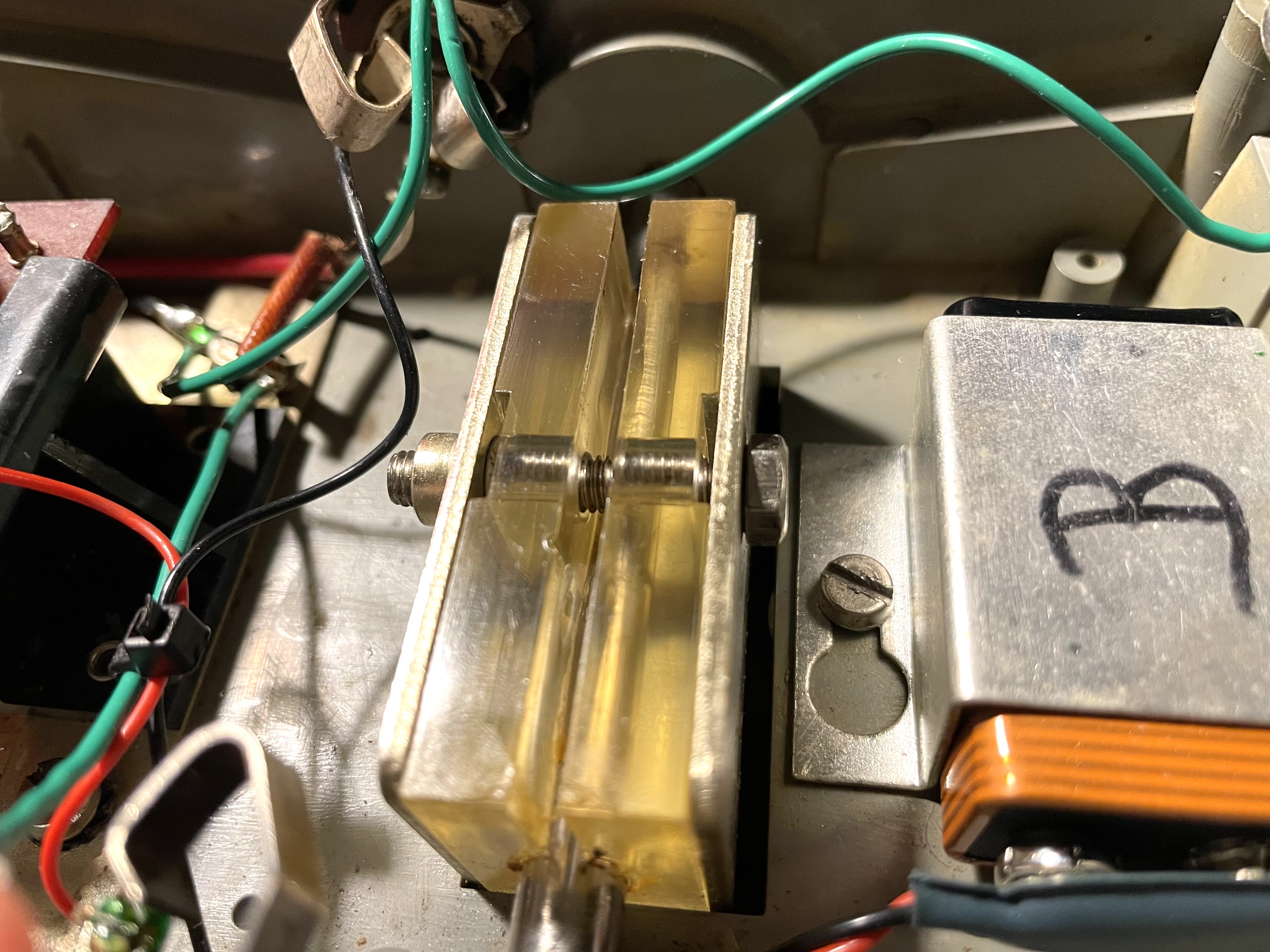 |
Finally, we have arrived at the method of adjusting the stiffness of the treadle. There is a U-shaped piece of plastic between two metal plates which can be cinched togther by tightening a small bolt which passes thru all of the pieces. In essence, this clamps down on the rod that is connected to the treadle and adjusts how much resistance there is when moving the treadle up and down. The 9V battery is held in place with a removable metal piece which holds it very firmly in place. I have seen other examples where there is a battery door on the baseplate instead of this arrangement. |
That's about all I know about this specific pedal. If you have more detailed info on these Farfisa pedals I would be very interested to learn more. Please contact
me via the email link on my home page.